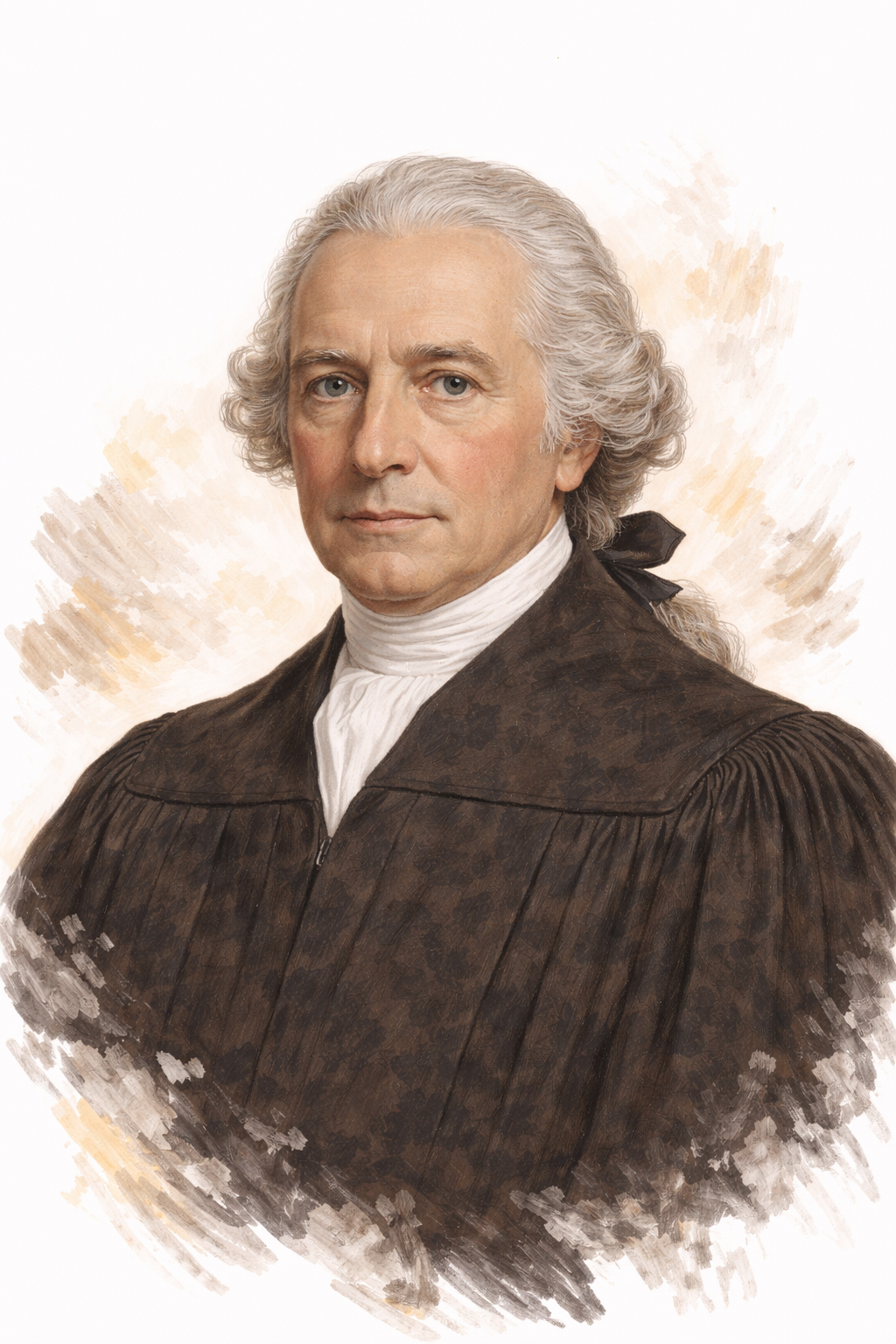
Alfred Moore
Details
- Birth
- May 21, 1755 · Brunswick County, North Carolina
- Death
- October 15, 1810
- Law school
- Read law (Moore, Maurice)
- Prior experience
- State trial court judge
Biography
Alfred Moore (May 21, 1755 – October 15, 1810) was an Associate Justice of the United States Supreme Court from 1799 to 1804. Born in New Hanover County, North Carolina, to a prominent planter family, Moore received his early education locally before studying law. He was admitted to the North Carolina bar and established a legal practice in Wilmington. During the American Revolution, Moore served as a captain in the Continental Army and later as a colonel in the North Carolina militia, participating in several engagements against British forces in the Carolinas. Following the war, Moore became active in North Carolina politics and law. He served as the state's attorney general from 1782 to 1791 and was instrumental in establishing the University of North Carolina, serving on its first board of trustees. Moore also sat on the North Carolina Superior Court from 1798 to 1799. President John Adams nominated him to the Supreme Court on December 4, 1799, following the death of Justice James Iredell, and the Senate confirmed his appointment on December 10, 1799. Moore's tenure on the Supreme Court was notably brief, lasting only four years and seven months. During this period, he authored only one recorded opinion, a brief concurrence in *Bas v. Tingy* (1800), which dealt with maritime law during the Quasi-War with France. His judicial philosophy generally aligned with Federalist principles, supporting federal authority and commercial interests. Moore resigned from the Court on January 26, 1804, citing the physical demands of circuit riding, which required justices to travel extensively throughout their assigned regions. His legacy rests primarily on his contributions to North Carolina's legal and educational foundations rather than his Supreme Court jurisprudence, as his abbreviated tenure provided limited opportunity for significant constitutional interpretation.
Notable opinions
- Bas v. Tingy
- United States v. Williams