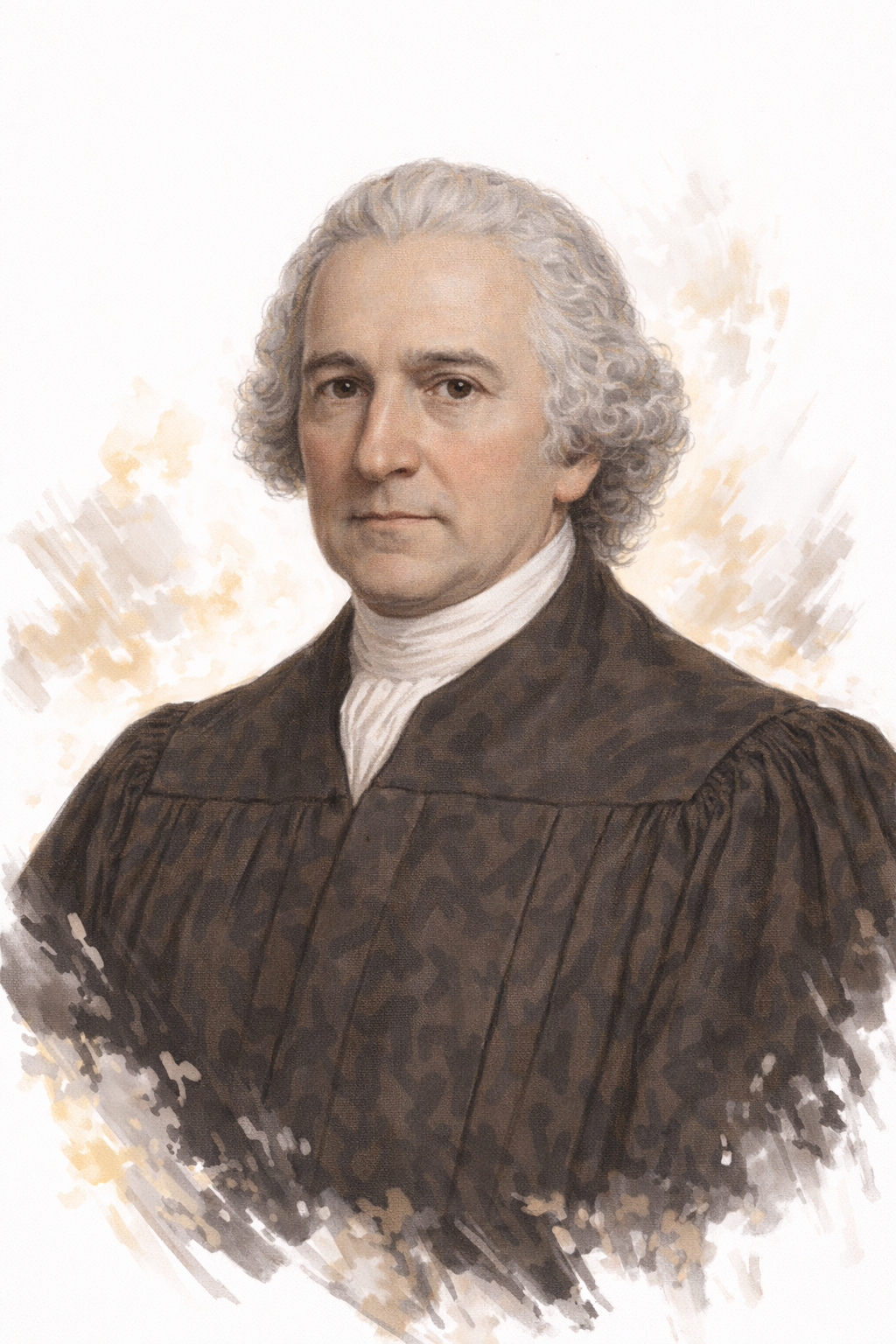
Bushrod Washington
Details
- Birth
- June 5, 1762 · Westmoreland County, Virginia
- Death
- November 26, 1829
- Law school
- william and mary, college of; read law (Wilson, James)
- Prior experience
- U.s. supreme court justice (recess)
Biography
Bushrod Washington (June 5, 1762 – November 26, 1829) was an Associate Justice of the United States Supreme Court from 1798 to 1829. Born in Westmoreland County, Virginia, he was the nephew of President George Washington and inherited Mount Vernon upon his uncle's death. Washington received his early education at Deacon John Jones's school and later graduated from the College of William and Mary in 1778. He studied law under George Wythe and was admitted to the Virginia bar in 1784, establishing a successful legal practice in Alexandria and later Richmond. Washington's path to the Supreme Court began with his Federalist political affiliations and legal reputation. President John Adams nominated him to fill the seat vacated by James Wilson in 1798, and he was confirmed by the Senate at age 36, making him one of the youngest justices ever appointed. His judicial philosophy aligned with Federalist principles, emphasizing a strong national government and broad interpretation of federal constitutional powers. Washington consistently supported Chief Justice John Marshall's nationalist jurisprudence and voted with the majority in landmark cases such as McCulloch v. Maryland (1819) and Gibbons v. Ogden (1824). Washington's most significant individual contribution was his opinion in Corfield v. Coryell (1823), where he provided an influential interpretation of the Privileges and Immunities Clause, defining the "privileges and immunities of citizens in the several states." His tenure of over three decades helped establish important precedents during the Court's formative years under Marshall. Washington's legacy includes his role in strengthening federal authority and contributing to the development of American constitutional law during a crucial period of national consolidation. He died in office in 1829, having served longer than all but a handful of Supreme Court justices in American history.
Notable opinions
- Trustees of Dartmouth College v. Woodward
- Cohens v. Virginia