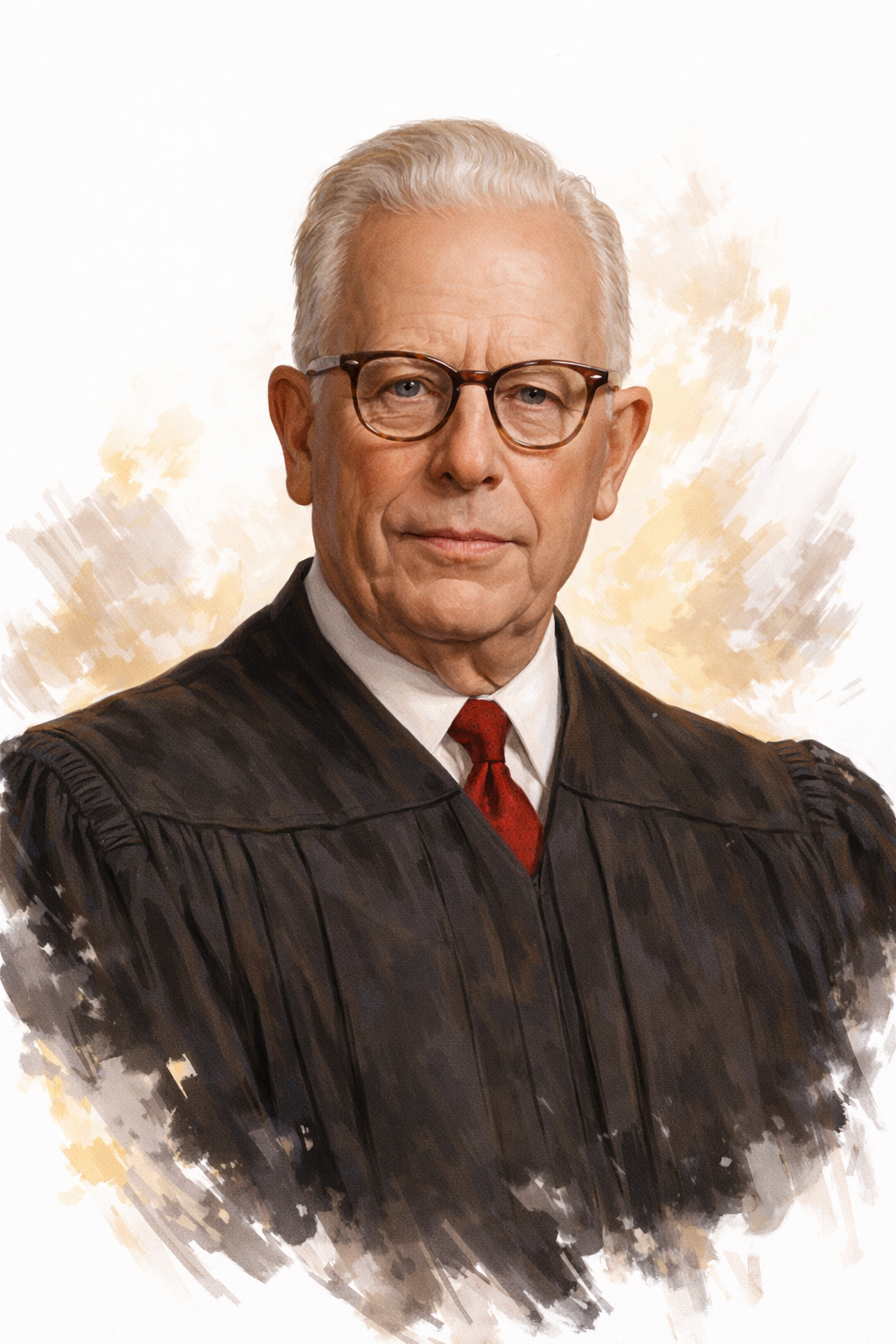
Earl Warren
Details
- Birth
- March 19, 1891 · Los Angeles, California
- Death
- July 9, 1974
- Law school
- california, university of
- Prior experience
- U.s. supreme court justice (recess)
Biography
Earl Warren (1891-1974) was the 14th Chief Justice of the United States, serving from 1953 to 1969. Born in Los Angeles, California, Warren earned his undergraduate degree and law degree from the University of California, Berkeley. He began his career as a prosecutor in Alameda County, eventually becoming district attorney in 1925. Warren served as California's Attorney General from 1939 to 1943 before being elected Governor of California, holding the office for three terms from 1943 to 1953. He was the Republican vice presidential nominee alongside Thomas Dewey in 1948. President Dwight D. Eisenhower appointed Warren as Chief Justice in 1953, initially as a recess appointment. Warren's tenure marked one of the most transformative periods in Supreme Court history, characterized by judicial activism and an expansive interpretation of constitutional rights. His judicial philosophy emphasized protecting individual liberties and ensuring equal justice under law, often prioritizing practical outcomes over strict constitutional construction. Warren authored the unanimous decision in Brown v. Board of Education (1954), which declared racial segregation in public schools unconstitutional and overturned the "separate but equal" doctrine. Other landmark decisions during the Warren Court included Baker v. Carr (1962), establishing the principle of "one person, one vote" for legislative apportionment; Miranda v. Arizona (1966), requiring police to inform suspects of their rights; and Loving v. Virginia (1967), striking down laws banning interracial marriage. The Warren Court's liberal activism drew significant conservative criticism, leading to the phrase "Impeach Earl Warren" becoming a rallying cry among opponents. Warren retired in 1969 and died in 1974, leaving a legacy as one of the most influential Chief Justices in American history.
Notable opinions
- Brown v. Board of Education
- Miranda v. Arizona
- Loving v. Virginia