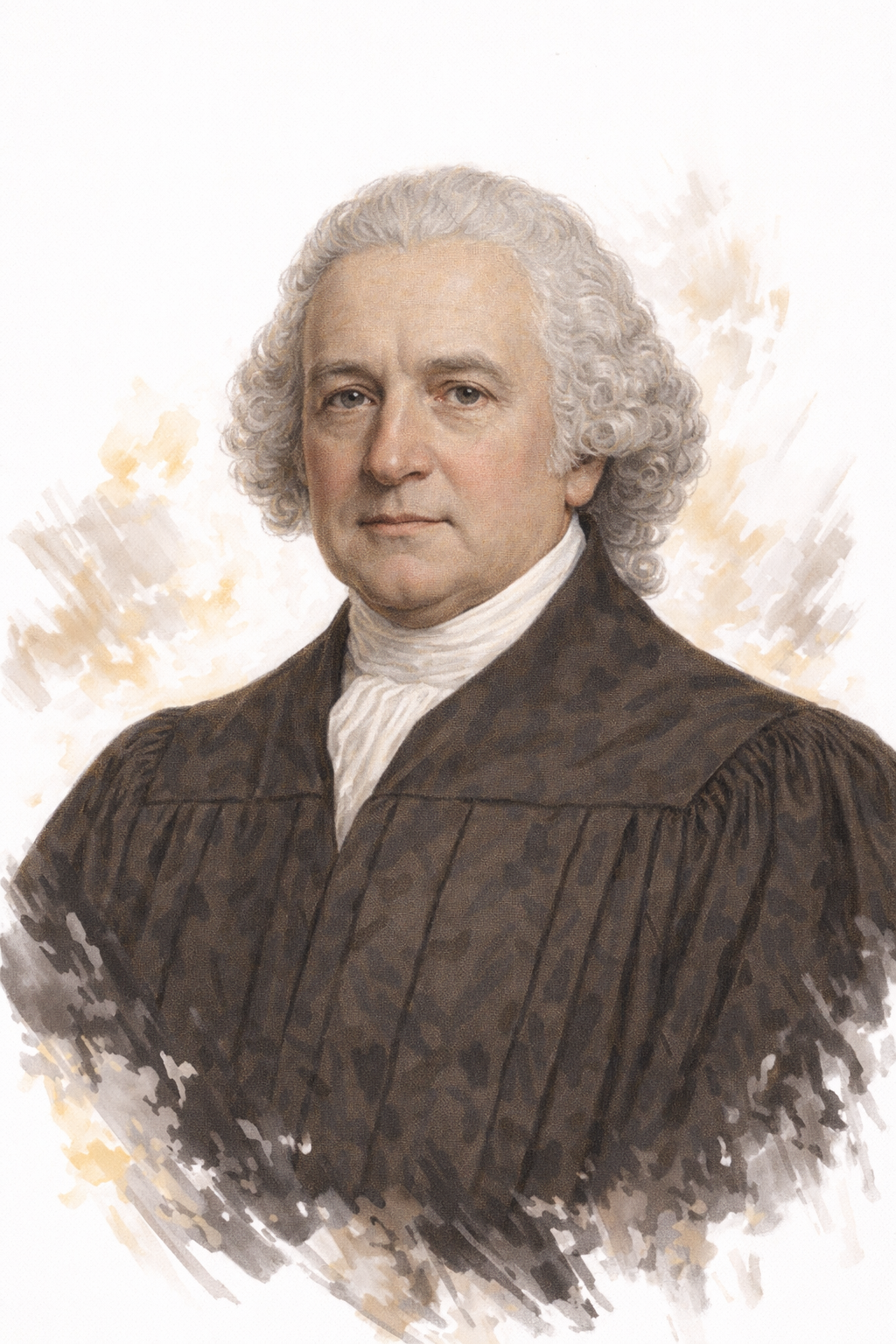
William Cushing
Details
- Birth
- March 1, 1732 · Scituate, Massachusetts
- Death
- September 13, 1810
- Law school
- harvard university; read law (Gridley, Jeremiah)
- Prior experience
- State highest court justice
Biography
William Cushing (March 1, 1732 – September 13, 1810) was an American jurist who served as an Associate Justice of the United States Supreme Court from 1790 to 1810, making him the longest-serving of the Court's original members. Born in Scituate, Massachusetts, to a prominent legal family, Cushing graduated from Harvard College in 1751 and studied law under Jeremiah Gridley before establishing a practice in Massachusetts. He served as a judge on the Massachusetts Superior Court from 1772 to 1789, initially appointed under the colonial government but later continuing under the revolutionary government after declaring his support for American independence. President George Washington nominated Cushing as one of the original six Associate Justices of the Supreme Court in 1789, and he was confirmed by the Senate on September 26, 1789. Washington briefly nominated him as Chief Justice in 1796 following John Jay's resignation, but Cushing declined the position due to his advanced age and health concerns. During his tenure, Cushing participated in establishing key precedents for the new federal judiciary, including the Court's early decisions on federal jurisdiction and constitutional interpretation. He wrote few major opinions due to the Court's limited docket and the practice of seriatim opinions, but he consistently supported federal authority and the supremacy of federal law over state law. Cushing's most notable contribution was his role in Chisholm v. Georgia (1793), where he joined the majority in ruling that states could be sued by citizens of other states in federal court, a decision that led to the adoption of the Eleventh Amendment. His legacy rests primarily on his service as a foundational figure who helped establish the Supreme Court's institutional credibility and procedures during the critical early years of the American republic.
Notable opinions
- Chisholm v. Georgia
- Talbot v. Janson